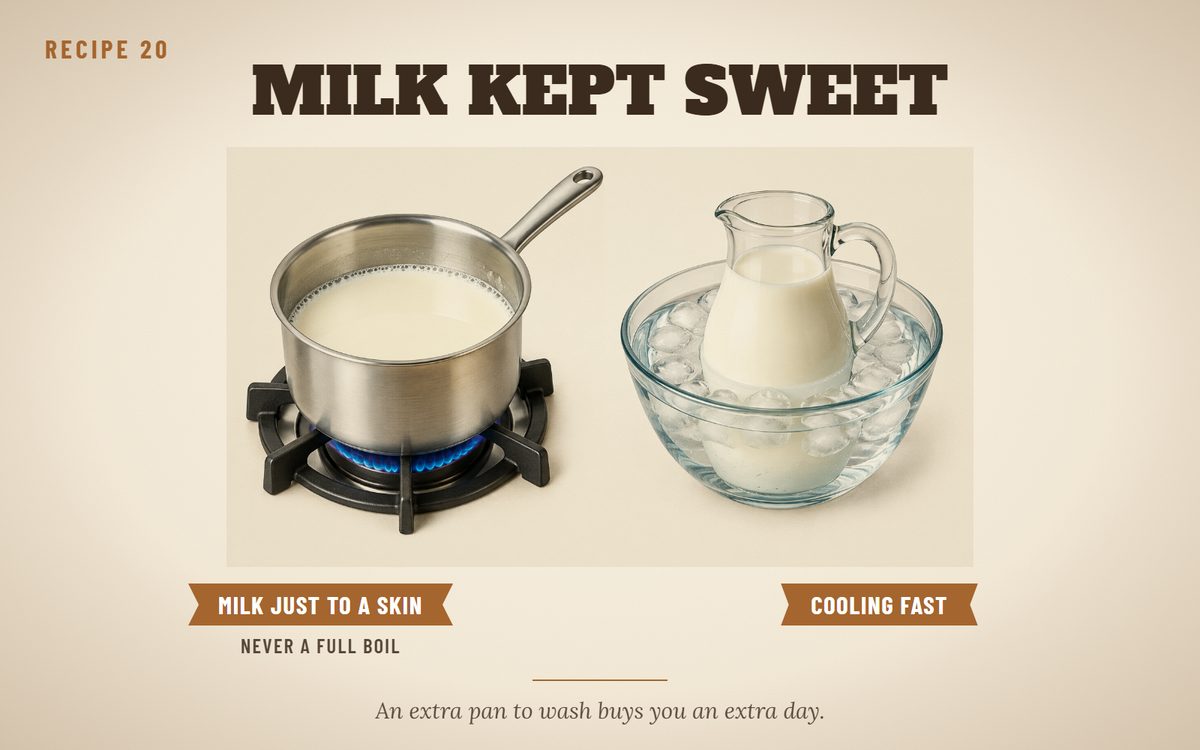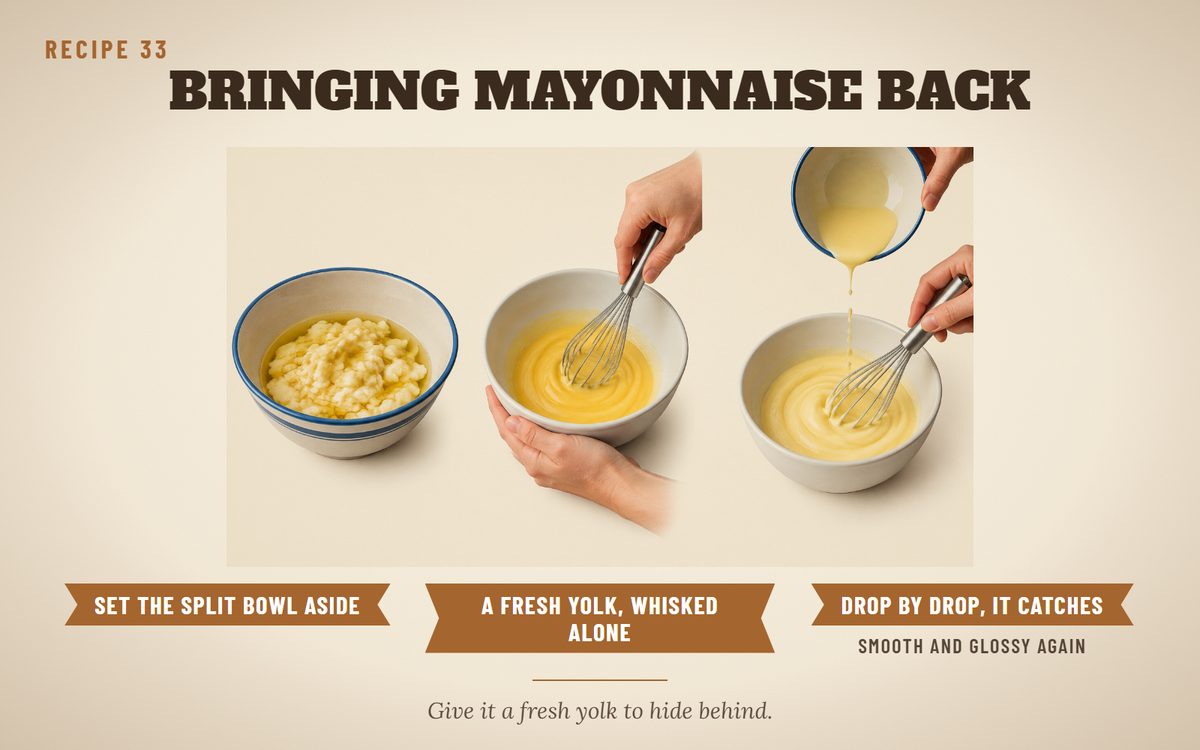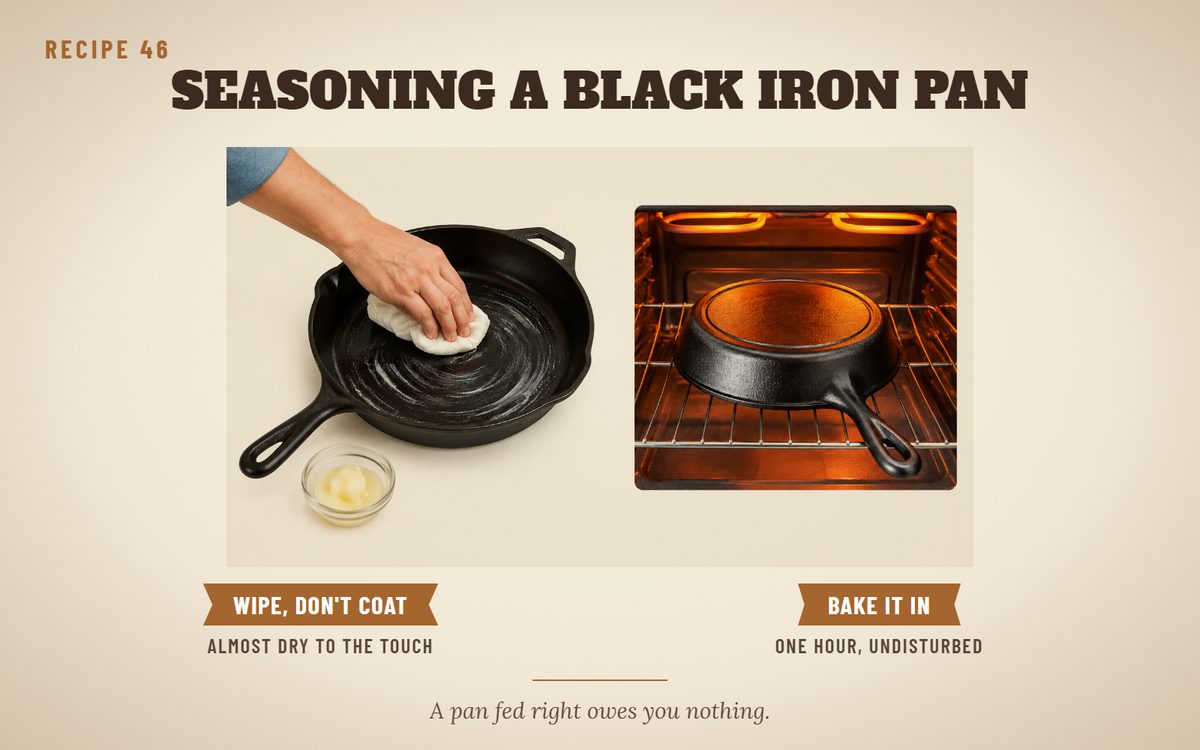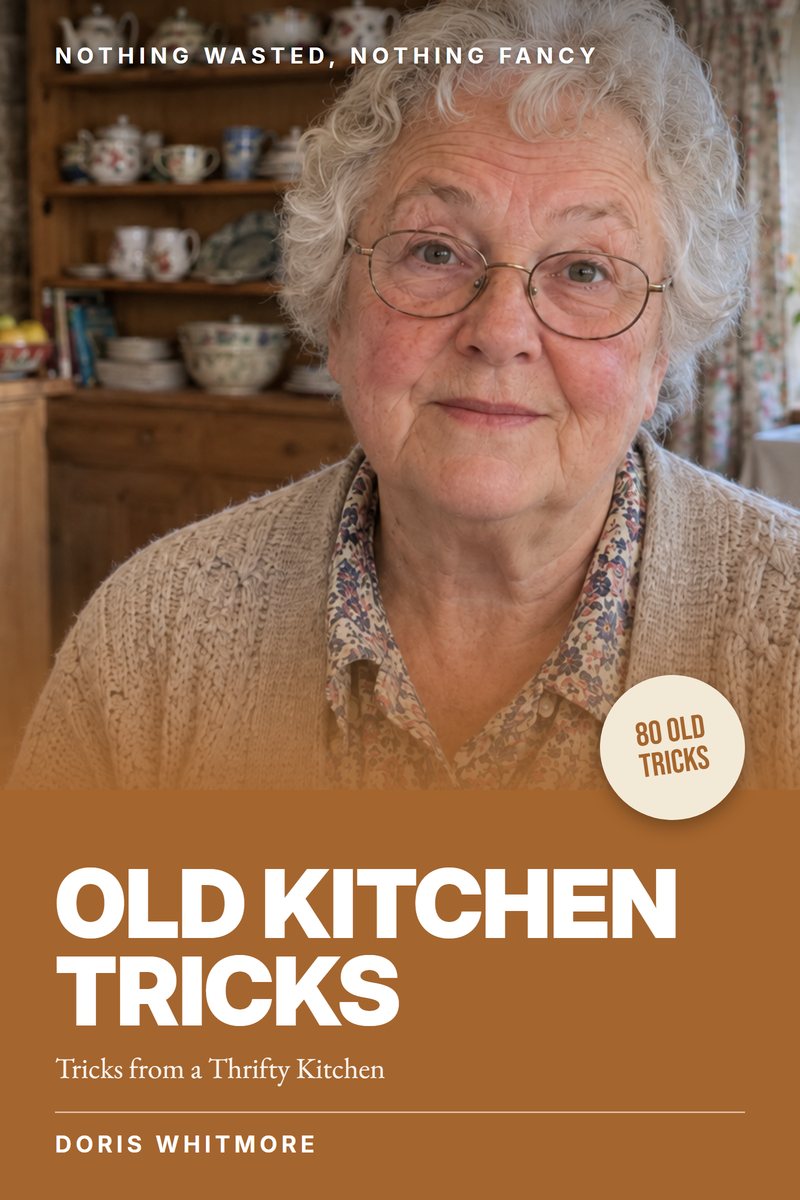
Eighty of the tricks that came out of a Dales kitchen that never once threw a joint of meat, an egg, or a heel of cheese away — turning Sunday's roast into Monday's shepherd's pie, keeping eggs through a long winter in waterglass, mending a curdled custard, seasoning a black iron pan, and sixty-odd more just like them, numbered and plain. Nothing in it needs a special shop trip or a gadget from a catalogue.
By buying you agree to the Terms of Sale and Refund Policy.
0 people went to checkout in the last 24 hours
PDF · 306 pages · 80 illustrated recipes · read on phone, tablet or computer, or print it
This is for the Monday when there's not quite enough left for everyone, and buying more isn't the answer. It's for the curdled custard you were about to tip down the sink, and the sugar gone hard as a doorstop in the tin. Open the right page and the kitchen carries on as if nothing went wrong at all.
At the back there's an index of 250 things that can go wrong on the plate — a sunken sponge, a greasy soup, a split mayonnaise. Look up the symptom, not the recipe name, and it points you straight to the fix.
247 mistakes are named right inside the lessons themselves, each with the sign that tells you it's happening and the plain fix, so you catch it before it reaches the table.
224 figures sit in the reference pages — oven heat, timings, ratios of salt to water — so nothing is left to 'about' or 'roughly', the way Mother never needed to guess.
No subscription, no app to update, no account to remember a password for. One payment, one PDF, yours for as long as you want to open it.
A Sunday joint that feeds a family typically costs somewhere around $15-20. Stretched into Monday's shepherd's pie with the tricks in this book, that same joint covers a second dinner for the same table — against perhaps $12-15 to buy and cook a second meal from scratch. The book costs $19 once; the trick pays for itself the first Monday you use it, and keeps paying every Monday after.
These are typical figures for a family meal and will vary with your butcher, your family size, and where you shop.
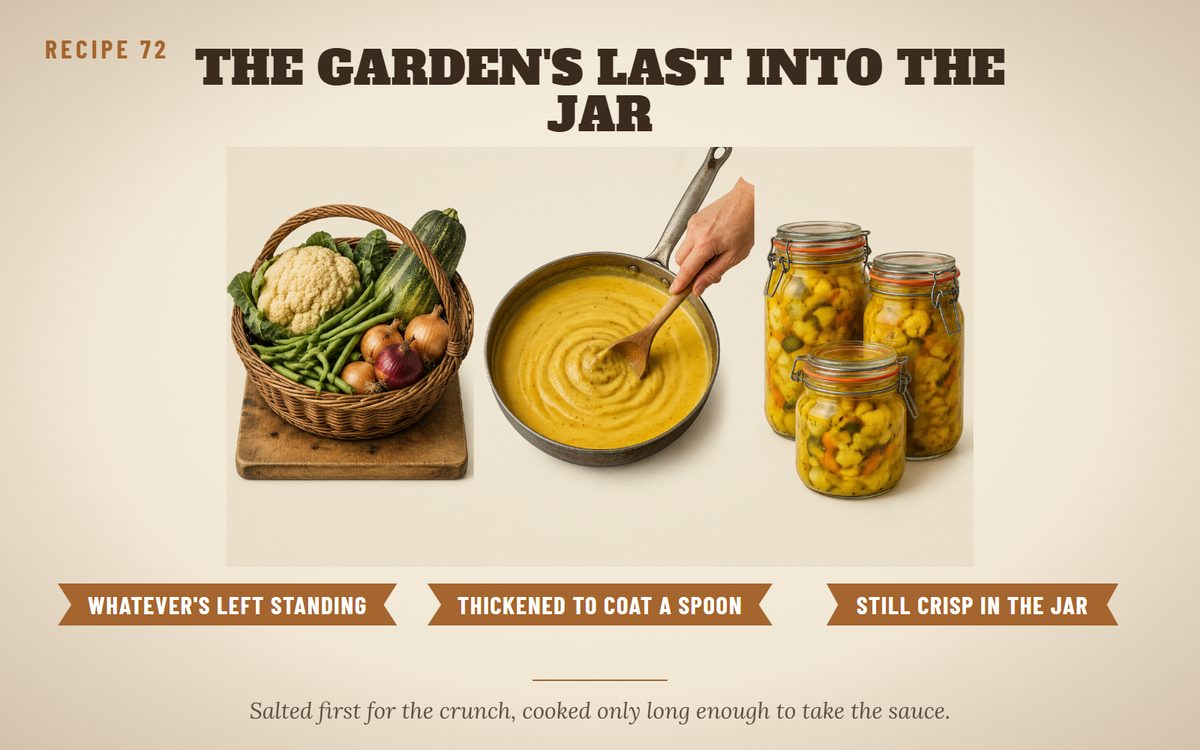
Everything that came out of a rationing-era kitchen and never left it: stretching a joint of meat, keeping food fresh without a fridge, rescuing a kitchen mistake, baking that always works, caring for pots and pans, saving every scrap of fat and stock, and seeing a pantry year through from the first pickled onion to the last jar of lemon curd.
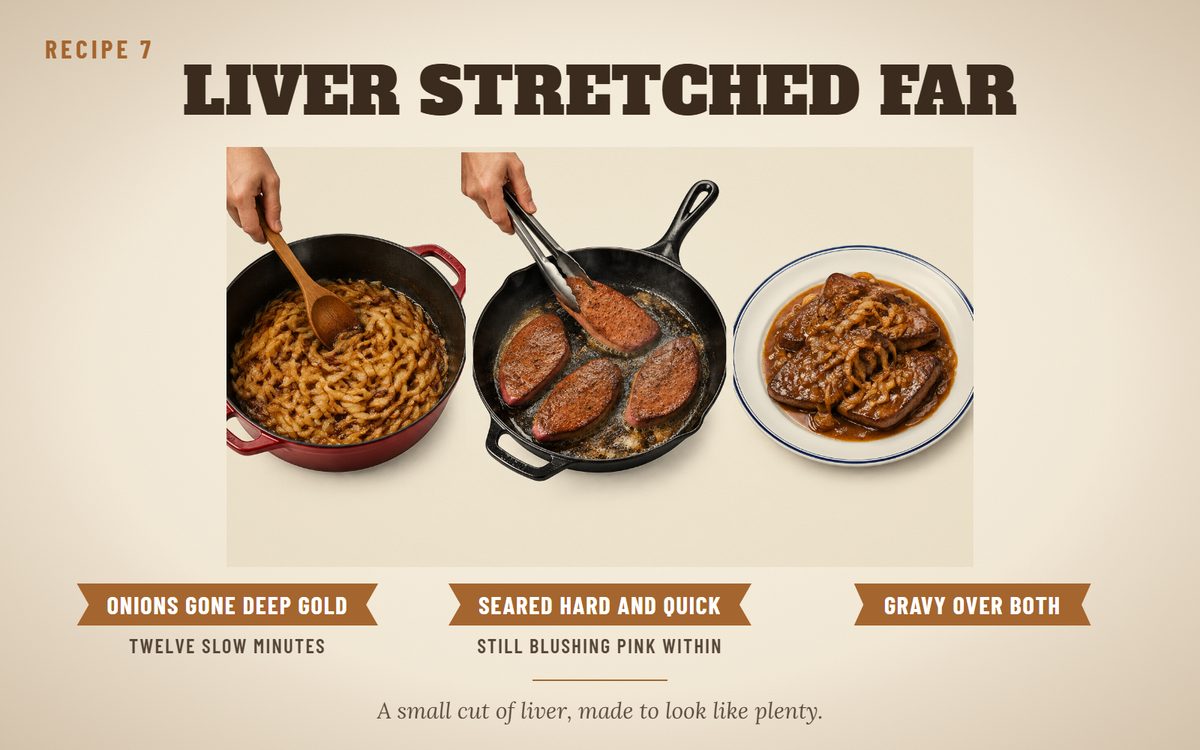
All 80 lessons carry their own drawing, so you can see what the dish, the pan, or the trick is meant to look like before you start.


Click any page to read it up close — exactly what opens on your phone after you pay.
← swipe for more pages →
"Nothing wasted, nothing fancy"
My mother said it every week over the rationing books, while she worked out what five mouths were going to eat on what was left in the tin. Nothing wasted, nothing fancy — that was the whole of her cookery, really, and I grew up at her elbow learning it without ever being taught it properly, the way you learn to walk.
When I married and had my own kitchen to run, there was still only one wage coming in and five of us sitting down to it, so her tricks weren't a nice idea, they were simply how Tuesday worked. I kept doing them long after rationing itself was over, because a good trick doesn't go off just because times got easier.
For years they lived nowhere but in my head and on a few scraps of paper tucked behind the clock. I started writing them down properly because I didn't want them to end with me, forgotten along with the shilling and the ration book.
Every lesson in here is one I did myself, more times than I could count, at a cooker that was never new and in a kitchen that was never big. Waste not, want not — that's how Mother did it, and it's how I've done it ever since.
— Doris

I'm Doris Whitmore. I was born in 1945 in a small stone village near Skipton, in the Yorkshire Dales, and I grew up watching my mother raise three children through rationing on almost nothing in the larder — and still put something warm on the table every single day.
I learned to cook at her elbow, and later spent forty years cooking for five people on my husband's single mill wage. The tricks in this book are hers as much as mine; I only wrote them down.
I'm not fancy about food and never have been. If it stretches further, keeps longer, or comes back from a mistake, it earns its place in my kitchen — and now in this book.
“Nothing wasted, nothing fancy — that's tea sorted for under a pound.”
One digital cookbook, Old Kitchen Tricks — 80 recipes and tricks across 7 sections, as a PDF you can read on any device.
The download page opens right after you pay, with the PDF ready to open or save. Nothing is posted.
Yes. Print the whole thing or just the page you need — it's yours to use however suits you.
No, there's nothing posted and no waiting. It's a PDF you download and keep, not a printed book.
There's nothing clever to it. You pay, a page opens with your book on it, and you click to open or save the PDF — much the same as opening an email.
Just keep the download page link or the PDF saved somewhere safe, like any other document. Your checkout receipt will also have your payment details on it.
No. It's one payment, made once, and the book is yours to keep — nothing recurring, nothing to cancel.
Yes — these are old kitchen methods used for generations, with clear steps and sensible limits given anywhere care matters, such as with eggs or preserving.
You have 14 days to ask for your money back, no explanation needed, and you keep the book regardless.
By card, Apple Pay, or Google Pay, through a secure checkout — no account needed.
Eighty tricks from a kitchen that never had room for waste. Read it once and you'll find a use for most of them within the week.
By buying you agree to the Terms of Sale and Refund Policy.
0 people went to checkout in the last 24 hours